

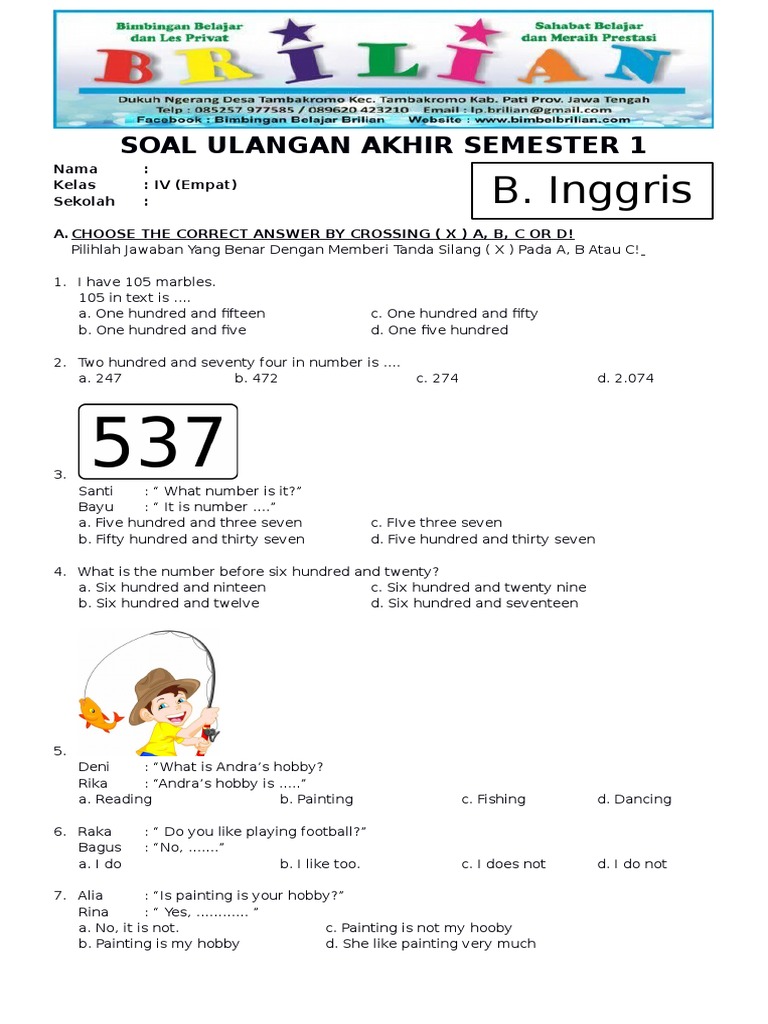
The world of science is a vast and fascinating realm, brimming with discoveries that explain the wonders around us. For fourth-graders, this is a pivotal year where foundational scientific concepts are introduced and explored. To solidify understanding and build confidence, regular practice is key. This article offers a comprehensive guide to engaging science practice exercises for 4th graders, specifically designed to be used and understood in English. We will delve into various topics, provide example questions, and offer tips for effective learning.
Why English for Science Practice?
In an increasingly globalized world, proficiency in English is an invaluable asset. For young learners, engaging with science concepts in English not only enhances their scientific literacy but also simultaneously boosts their language skills. It exposes them to scientific terminology, encourages critical thinking in a new linguistic context, and prepares them for future academic and professional endeavors.
Key Science Topics for 4th Grade
Fourth-grade science curricula typically cover a range of exciting topics. Here are some of the most common areas, along with the types of practice exercises that can be beneficial:
1. Living Things and Their Environments (Ecology)
This unit focuses on understanding the diversity of life, the characteristics of living organisms, and how they interact with their surroundings.
- Concepts: Plants, animals, habitats, ecosystems, food chains, life cycles.
- Example Practice Exercises:
- Vocabulary Matching: Match scientific terms (e.g., habitat, producer, consumer, photosynthesis) with their definitions.
- Classification Activities: Given a list of organisms, students sort them into categories like plants and animals, or by their habitat (e.g., forest, desert, ocean).
- Food Chain Construction: Provide images of organisms and ask students to arrange them in the correct order to form a simple food chain.
- Life Cycle Sequencing: Students put pictures or descriptions of a plant or animal’s life cycle (e.g., seed to adult plant, egg to butterfly) in the correct chronological order.
- Scenario-Based Questions: "Imagine a forest ecosystem. If all the rabbits disappeared, what might happen to the fox population? Explain your answer."
2. Matter and Energy (Physics and Chemistry Basics)
This unit introduces fundamental concepts about the physical world, including the properties of matter and different forms of energy.
- Concepts: Solids, liquids, gases, properties of matter (color, shape, size, texture), states of matter, heat, light, sound.
- Example Practice Exercises:
- Identifying States of Matter: Show pictures of water in different forms (ice, liquid water, steam) and ask students to identify the state of matter.
- Property Description: Provide an object (e.g., a rock, a feather) and ask students to describe its properties using English adjectives.
- Cause and Effect (Heat): "If you leave an ice cube in a warm room, what will happen? What is the energy transfer involved?"
- Sound Exploration: "Describe how sound travels. Can you give an example of a loud sound and a quiet sound?"
- Experiment Analysis: Present a simple experiment description (e.g., mixing baking soda and vinegar) and ask students to predict the outcome and describe the observations.
3. Earth and Space (Geology and Astronomy)
This unit explores our planet, its systems, and our place in the solar system and beyond.
- Concepts: Rocks, minerals, soil, weather, water cycle, Earth’s rotation and revolution, the Sun, Moon, and stars.
- Example Practice Exercises:
- Rock and Mineral Identification: Provide images of different rocks and minerals and ask students to identify them based on descriptions of their properties (e.g., shiny, rough, hard).
- Water Cycle Diagram Labeling: Provide a diagram of the water cycle and ask students to label the different stages (e.g., evaporation, condensation, precipitation).
- Day and Night Explanation: "Explain why we have day and night. What causes this change?"
- Phases of the Moon: Show images of the different phases of the Moon and ask students to put them in order.
- Solar System Order: "List the planets in order from the Sun."
4. Forces and Motion (Physics Basics)
This unit introduces the concepts of forces, how they affect objects, and how objects move.
- Concepts: Push, pull, gravity, friction, motion, speed, direction.
- Example Practice Exercises:
- Identifying Forces: "When you push a swing, what kind of force are you using? What force pulls the swing back down?"
- Friction Scenarios: "Imagine sliding on a smooth floor versus a carpeted floor. Which one has more friction? How does friction affect your movement?"
- Describing Motion: "Describe the motion of a ball rolling down a hill. What forces are acting on it?"
- Gravity Explanation: "What is gravity? How does it affect us and objects around us?"
Creating Engaging Practice Exercises
Beyond standard question formats, here are some strategies to make science practice more engaging for 4th graders in English:
- Visual Aids: Use plenty of pictures, diagrams, and real-life examples. For instance, when teaching about plant parts, show real plant specimens or high-quality photographs.
- Hands-on Activities: Whenever possible, integrate simple experiments or demonstrations. After conducting an experiment, ask students to write down their observations and conclusions in English.
- Storytelling: Frame scientific concepts within engaging narratives. For example, create a story about a tiny seed traveling through the water cycle.
- Interactive Games: Develop or use online games that reinforce scientific vocabulary and concepts. This could include quizzes, matching games, or drag-and-drop activities.
- Real-World Connections: Help students see how science applies to their everyday lives. Discuss the science behind cooking, weather patterns, or the technology they use.
- Differentiated Instruction: Recognize that students learn at different paces. Provide variations of exercises with varying levels of complexity or offer additional support for those who need it.
- Encourage Explanation: Don’t just ask for answers; encourage students to explain their reasoning in English. This builds deeper understanding and improves their communication skills. For example, instead of just asking "What is photosynthesis?", ask "Explain in your own words how plants make their own food."
Tips for Effective Learning Through Practice
- Regularity is Key: Short, consistent practice sessions are more effective than infrequent, long ones.
- Focus on Understanding, Not Just Memorization: Encourage students to grasp the "why" behind scientific phenomena.
- Review and Reinforce: Regularly revisit previously learned concepts to ensure retention.
- Positive Reinforcement: Praise effort and progress, and create a supportive learning environment where mistakes are seen as learning opportunities.
- Make it Fun! When learning is enjoyable, students are more motivated and receptive.
- Utilize Resources: Explore online educational platforms, science books for children, and educational videos that present concepts in English.
- Parental/Teacher Involvement: Active participation from parents and teachers can significantly enhance the learning process. Discussing the exercises and the concepts involved in English can be highly beneficial.
Example Practice Questions Across Topics (in English)
Here are some more specific examples of practice questions that a 4th grader might encounter:
Topic: Living Things and Their Environments
- Label the diagram: (Diagram of a plant with roots, stem, leaves, flower)
- A. Roots
- B. Stem
- C. Leaves
- D. Flower
- Fill in the blanks: The place where an animal or plant lives is called its _______. (Answer: habitat)
- True or False: All plants are producers. (Answer: True)
- What is a carnivore? (Answer: An animal that eats meat.)
- Describe the life cycle of a butterfly in four steps. (Expected answer: Egg, larva/caterpillar, pupa/chrysalis, adult butterfly)
Topic: Matter and Energy
- Circle the liquids: Water, Rock, Milk, Air, Juice
- What happens when you heat water until it boils? (Answer: It turns into steam/gas.)
- Give one example of a solid. (Answer: Table, Chair, Book, etc.)
- What do we use to see? (Answer: Light)
- How does sound travel? (Answer: Through vibrations.)
Topic: Earth and Space
- Which planet is closest to the Sun? (Answer: Mercury)
- What is the process called when water turns into vapor and rises into the air? (Answer: Evaporation)
- What causes day and night? (Answer: The Earth rotating on its axis.)
- What is the large star at the center of our solar system? (Answer: The Sun)
- Name one type of rock. (Answer: Igneous, Sedimentary, Metamorphic)
Topic: Forces and Motion
- Push or Pull?
- Opening a door: _______
- Pulling a wagon: _______
- What force pulls everything towards the center of the Earth? (Answer: Gravity)
- Friction is a force that opposes motion. True or False? (Answer: True)
- When a car stops, what force is slowing it down? (Answer: Friction)
- Describe how a ball moves when you throw it. (Expected answer: It moves forward and then falls down due to gravity.)
Conclusion
Engaging with science practice exercises in English for 4th graders is a powerful way to build a strong foundation in both scientific understanding and language proficiency. By employing a variety of engaging methods, focusing on conceptual understanding, and providing consistent opportunities for practice and reinforcement, educators and parents can empower young learners to explore the wonders of science with confidence and curiosity. The journey of scientific discovery begins with solid understanding, and consistent, well-designed practice is the perfect vehicle for that journey.